The Fuel Store Card
For the first two weeks of the conflict, the Strait of Hormuz was the focal point: a chokepoint that, if closed, would cut off a fifth of the world's oil supply. Today the disruption spread further. Two oil tankers were found burning off Iraq's coast following attacks. A third vessel was struck near Dubai. In response, Iraq and Oman both closed their oil export terminals. Oman's Mina Al Fahal port, one of the Gulf's primary export points, shut on security grounds. The conflict is no longer contained to one waterway.
Yesterday the International Energy Agency coordinated the largest strategic reserve release in its history: 400 million barrels from member countries including the UK, Germany, Austria and Japan. It was designed to signal to markets that supply could be replaced. Today oil prices rose regardless. The market's message is clear: the scale of the disruption is larger than what a reserve release can offset, at least in the short term. Strategic reserves are a pressure valve, not a replacement for Gulf supply.
Major international banks including Citi and HSBC temporarily closed offices across the Persian Gulf after Iran's military threatened US and Israeli-linked financial institutions. The closures are precautionary, but they signal something important: the conflict is creating operational risk beyond energy markets. For businesses with functions or supplier relationships in the Gulf, this is worth monitoring.
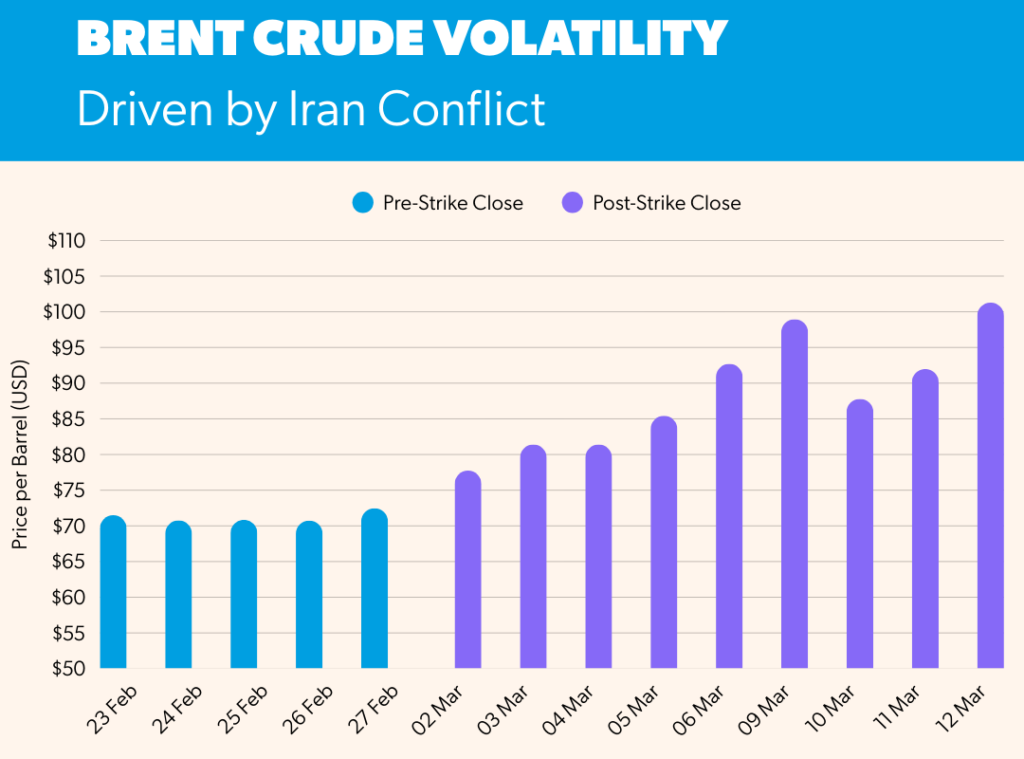
President Trump claimed on Wednesday that the US has already won the war. Iran has not stopped its attacks. That gap between political messaging and ground reality is exactly what markets are trying to price and why volatility remains extreme. There is no ceasefire process, no diplomatic track, and no clear definition of what an end to the conflict looks like.
Our fuel card rates are set weekly. The current rate holds until Sunday. New rates take effect from Monday 16th March, reflecting a market that has moved significantly. Fleets that can draw fuel before midnight Sunday will do so at the current rate. That window closes this weekend.
We will continue to update you as the situation develops.
Not yet a client? Find out how a fuel card could help your business manage costs during a period of market uncertainty.