The Fuel Store Card
The US-Israeli military operation against Iran is now in its seventh day. There is no ceasefire. Iran's foreign minister explicitly ruled out negotiations earlier this week. Israel's military said on Friday it has degraded around 80% of Iran's air defences, suggesting the campaign is advancing rather than winding down. Iran's president said on Friday that mediation efforts were ongoing from unnamed countries - but nothing concrete has emerged.
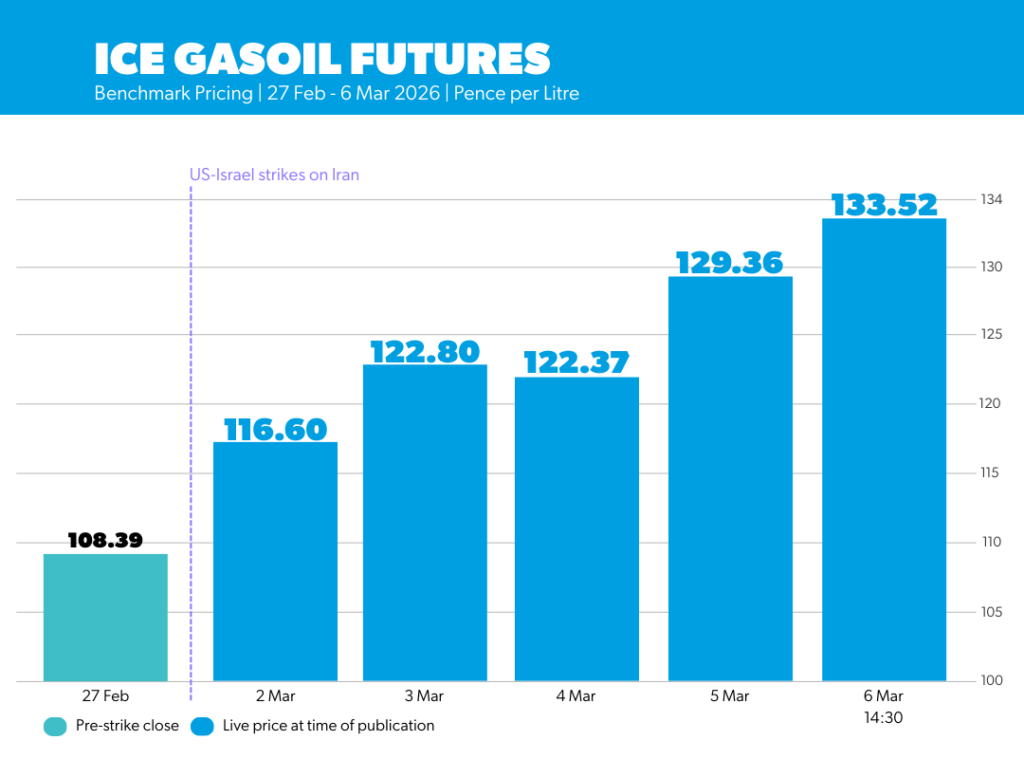
The most significant development today came from the International Energy Agency. Its executive director, speaking in Brussels this morning, warned that Iranian gas exports to Asian markets have effectively halted. If the disruption continues, he said, European and Asian buyers will be forced to compete for LNG supply that is becoming increasingly scarce - and prices will soar as a result.
For UK businesses, this goes beyond diesel. Gas prices feed directly into electricity costs, heating, and the operating costs of any business running refrigerated transport, manufacturing, or warehousing. A prolonged Hormuz disruption widens the cost impact well beyond the fuel pump.
It has been the most significant week for energy markets since the start of the Ukraine conflict in 2022. We have updated clients every day and our CEO Neil Radley has written to all clients personally today.
The key variable remains the Strait of Hormuz. Mediation efforts are under way - China sent a special envoy to the region this week and Iran's president acknowledged contact from unnamed countries on Friday. None of that amounts to a resolution, but the diplomatic track is at least active.
We will be back with updates next week as the situation develops.
Not yet a client? Find out how a fuel card could help your business manage costs during a period of market uncertainty.
This page will be updated as the situation develops.
Last updated: 6th March 2026.